 The Hydrated Gut
Drinking Plenty of Water and Still Constipated After 50? What I Learned
By Raymond Koekemoer · October 5, 2026
Labels used in this article: Tradition what Ayurveda and traditional Chinese practice teach · My experience what I tried and what happened to me · Research what studies and health bodies report. How I check what I publish
At fifty-four, I was doing what I had always been told. I drank water all day. The bottle went everywhere with me. And I was more constipated than I had ever been.
It was a strange kind of frustration. When the advice is “drink more water,” and you are already drinking plenty, where do you go next?
This piece is what I found when I started looking. It makes no medical promises. It is one person’s experience, set beside what is generally understood about digestion.
Why more water is not always the missing piece
Research Water matters. If you are short of fluid, the bowel takes back what it can, and stools become harder and drier. Drinking enough is a sound place to start.
But once you are drinking enough, more does not keep helping. The extra is simply passed as urine. If constipation continues in someone who is well watered, the cause usually lies somewhere else.
For me, that was the turning point. I stopped asking “how much?” and started asking “what else?”
The quieter things worth looking at
What the water arrives with. A glass of water on its own moves through quickly. Water held inside food — a soup, a stew, a soft porridge — travels with the meal. Fiber in particular needs fluid alongside it. Fiber added to a dry diet can make things worse, not better.
Warmth. Ayurveda and traditional Chinese practice both prefer warm drinks and cooked food for a sluggish gut, and have done for a very long time. Modern research has barely looked at the question. In my own experience, a warm, soft breakfast sat far better than a cold, dry one.
A little fat. Meals with almost no fat can leave food dry and hard to enjoy. A small amount of ghee, butter, or olive oil makes cooked food softer and more satisfying. A little is the point.
Rhythm. The gut likes routine. Regular mealtimes, an unhurried morning, and time to sit when the urge comes all help. Putting it off, day after day, teaches the body to stop asking.
Movement. A daily walk is one of the oldest and best-supported habits for regularity.
Medicines. Many common medicines can slow the bowel, including some painkillers, iron tablets, and some medicines for blood pressure, mood, and the bladder. Do not stop anything. Do ask your doctor or pharmacist whether one of yours might be playing a part.
What I changed
- I moved from cold, dry breakfasts to warm, soft ones.
- I put more of my fluid into my food: soups, stews, and porridges.
- I added a little ghee or butter to cooked meals.
- I kept my mealtimes steady, and gave myself time in the morning.
- I kept drinking water, but I stopped forcing it.
My experience Things eased over a few weeks, not days. Your body may respond differently, and some of this may not suit you. That is why it helps to watch your own pattern before changing much.
Start by observing
For three days, write down what you eat and drink, roughly when, and how your digestion behaves. Change nothing yet. Most people spot something they had not noticed: a dry breakfast, a long gap with no fluid, an afternoon of rushing.
Then change one thing at a time, and give it a week.
If you add fiber, add it slowly, with fluid. A sudden jump can mean gas and bloating.
When to see a doctor
Constipation is common, but it is not always simple. Please see your doctor if you have:
- blood in your stool, or black, tarry stools
- a change in your bowel habits that lasts more than a few weeks, especially after 50
- weight loss you cannot explain
- severe or persistent pain in your abdomen
- vomiting, or you cannot pass gas or stool
- constipation that began after starting a new medicine
These need a proper examination. A change of routine is not the answer to them.
If you have a heart or kidney condition, or you have been given a fluid limit, follow your doctor’s advice on how much to drink. And if you manage diabetes, talk with your care team before changing what or when you eat.
The short version
- Enough water matters. More than enough rarely helps.
- Look at warmth, moisture in your food, a little fat, routine, and movement.
- Ask your pharmacist about your medicines.
- Observe for three days before you change anything.
- See your doctor about any of the warning signs above.
This is the subject of my first book, The Hydration Trap. The recipes that came out of it are in The Desert Gut Cookbook.
Sources
The traditions and my own experience are described in the text. These are the published sources behind the research and official figures mentioned above.
- U.S. National Institute of Diabetes and Digestive and Kidney Diseases. Symptoms and Causes of Constipation. On fluids, fiber, activity, and the medicines that can slow the bowel.
- U.S. National Institute of Diabetes and Digestive and Kidney Diseases. Eating, Diet, and Nutrition for Constipation. On adding fiber a little at a time, with liquids.
Keep going
- Coming up On Friday, November 13 on the YouTube channel: Drinking Plenty of Water and Still Constipated After 50?
- Read next The Dry Breakfast Problem: Why a Soft, Warm Morning May Sit Better After 50
- Read next What Old Healing Traditions Say About Warmth, Moisture, and Digestion
- Free The Daily Hydration and Kitchen Planner, a printable day sent to your email
Found this useful? You can buy me a coffee. It’s a thank-you, not a payment for advice, and it helps keep the articles and videos coming.
From the books
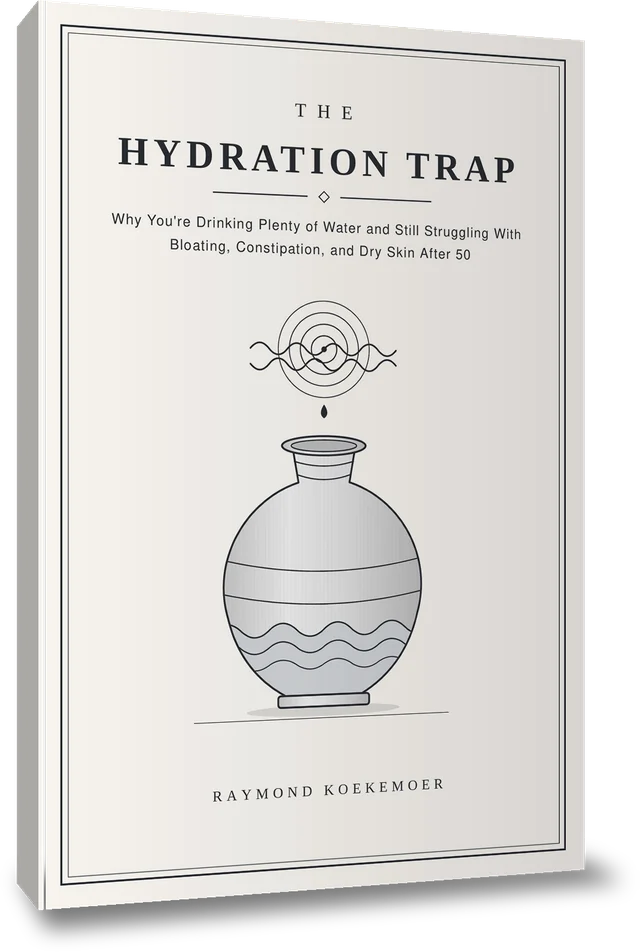
The Hydration Trap
Why You’re Drinking Plenty of Water and Still Struggling With Bloating, Constipation, and Dry Skin After 50
Kindle edition on Amazon Paperback on Amazon
Also available in Kindle Unlimited.
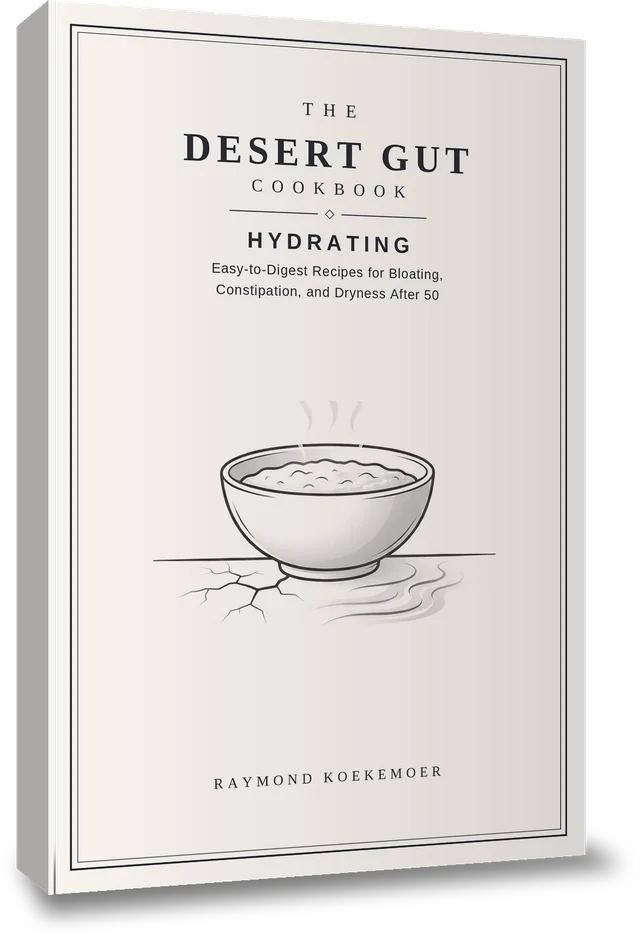
The Desert Gut Cookbook
Hydrating, Easy-to-Digest Recipes for Bloating, Constipation, and Dryness After 50
Kindle edition on Amazon Paperback on Amazon
Also available in Kindle Unlimited.