 The Hydrated Gut
Warm Water or Cold: Does Temperature Matter for Digestion After 50?
By Raymond Koekemoer · October 5, 2026
Labels used in this article: Tradition what Ayurveda and traditional Chinese practice teach · My experience what I tried and what happened to me · Research what studies and health bodies report. How I check what I publish
For most of my life, water meant cold water. Ice in the glass, a bottle from the fridge. It never occurred to me that the temperature might matter.
Then I came back to Ayurveda, which has preferred warm water for a very long time, and I tried a simple swap: a warm mug in the morning in place of the cold glass. I noticed a difference, and I have not gone back.
What the old traditions say
Tradition Ayurveda describes digestion as a kind of inner warmth. Food and drink are meant to meet that warmth, not put it out. Cold drinks, in this view, dampen digestion. Warm water supports it. Sipping warm water through the day is one of the oldest and simplest pieces of Ayurvedic advice.
Traditional Chinese practice arrived at much the same place by its own road. Warm water and warm teas are the everyday drink. Iced drinks with meals are discouraged.
Japan has its own version: plain hot water, often first thing in the morning. And across Korea, a warm roasted barley tea is the everyday drink.
Old traditions, developed far apart, watching the body closely for a very long time, and landing in a similar place. That does not settle the question. It is a reason to take the observation seriously, and then test it for yourself.
Two things you can see at the sink
You do not need a laboratory to notice what warmth does to water.
- Wash a greasy pan. In cold water, the fat clings and smears. In warm water, it loosens and lifts away.
- Drop a fizzy vitamin tablet into two glasses, one cold and one warm. The one in warm water dissolves faster.
These are pictures, not proof. They show that warm water gets on with dissolving and loosening more readily in the glass. They do not prove the same thing happens in the gut. They are why the traditional view is easy to picture.
What I have noticed myself
My experience In my own experience, it is easier to rehydrate with warm water than with cold. When I am dry, warm water seems to reach where it is needed, where cold water seems to pass straight through. A very small pinch of salt in the cup helps further, for me.
I can offer a guess at why. A cold drink has to be warmed by the body before much else happens, and a warm one arrives ready. That is my own reasoning, from my own experience. I cannot prove it, and you may find otherwise. The salt is not for everyone. See the cautions below.
What modern research has looked at
Research Not very much. Warm water costs nothing, and nobody sells it, so it has attracted little research money. The absence of large studies means the question has rarely been asked. It does not mean the traditions are wrong, and it does not mean they are proven.
What has been established is modest.
- Warm and cold water both hydrate you.
- Cold drinks are not dangerous for most healthy people.
- In one small study of people with a swallowing disorder, hot water relaxed the lower esophagus and cold water tightened it. In another small study, a cold drink left the stomach more slowly at first than one at body temperature.
So I treat the traditions, and my own experience, as a guide worth testing — not as a settled fact.
Why warm may suit some of us after 50
- A warm drink is sipped, not gulped. Slower drinking is often easier on the stomach.
- A warm mug in the morning is a pleasant ritual, and the gut responds to routine.
- Many people find a warm drink on waking is followed by a bowel movement.
- In the evening, a small warm cup can take the place of a late coffee or a cold, sweet drink.
A one-week experiment
You do not have to take anyone’s word for it, including mine.
- Days 1–2. Change nothing. Note what you drink, whether it is cold or warm, and how your stomach feels through the day.
- Days 3–7. Make one swap. Start the day with a warm mug: plain warm water, or a caffeine-free herbal tea. Keep everything else the same.
- At the end of the week, compare. Any change in bloating, comfort, or regularity? If yes, keep it. If not, you have lost nothing.
Warm means comfortably warm, not hot.
A few cautions
- Salt is not for everyone. Do not add salt to your drinks if you have high blood pressure, heart failure, or kidney disease, or if you have been told to limit sodium. For everyone else, a pinch means a few grains, not a spoonful.
- Not too hot. Very hot drinks can scald, and drinking them at high temperatures over many years has been linked with harm to the esophagus. Let the cup cool until it is comfortable to sip.
- Swallowing difficulties. If you have trouble swallowing, or have been told to thicken your drinks, follow your clinician’s advice.
- Fluid limits. If your doctor has set a limit on how much you drink, every cup counts toward it.
- Herbal teas are not all alike. Some interact with medicines. Chamomile, for example, may matter if you take a blood thinner. Ask your pharmacist.
- In hot weather or after exercise, a cool drink is perfectly sensible.
- Real dehydration is a medical matter. If you are losing fluid through vomiting, diarrhea, or fever, or you feel confused, faint, or very weak, get medical help. Proper oral rehydration solutions are made for that.
When to see a doctor
Warm water is a daily habit, not a treatment. See your doctor about bloating or discomfort that persists, pain when swallowing, food that feels stuck, unexplained weight loss, blood in your stool, or a lasting change in your bowel habits.
The short version
- Ayurveda and traditional Chinese practice have both favored warm water for a very long time.
- Warm water loosens and dissolves more readily in the glass. That is a picture, not a proof.
- In my experience, warm water rehydrates more easily than cold. Yours may differ.
- Try one warm mug each morning for a week, and judge for yourself.
The morning warm cup is one of the first small habits in my book The Hydrated Gut Protocol.
Sources
The traditions and my own experience are described in the text. These are the published sources behind the research and official figures mentioned above.
- Ren Y, and others. Response of esophagus to high and low temperatures in patients with achalasia. Journal of Neurogastroenterology and Motility, 2012. Twelve patients.
- Sun WM, and others. Effect of meal temperature on gastric emptying of liquids in man. Gut, 1988. Six volunteers.
- International Agency for Research on Cancer. IARC Monographs evaluate drinking coffee, maté, and very hot beverages. Press release 244, 2016. On very hot drinks, above about 149°F (65°C), and the esophagus.
Keep going
- Coming up On Friday, October 23 on the YouTube channel: Is Warm Water Better After 50? What 4 Old Traditions Actually Say
- Read next What Old Healing Traditions Say About Warmth, Moisture, and Digestion
- Read next The Dry Breakfast Problem: Why a Soft, Warm Morning May Sit Better After 50
- Free The Daily Hydration and Kitchen Planner, a printable day sent to your email
Found this useful? You can buy me a coffee. It’s a thank-you, not a payment for advice, and it helps keep the articles and videos coming.
From the books
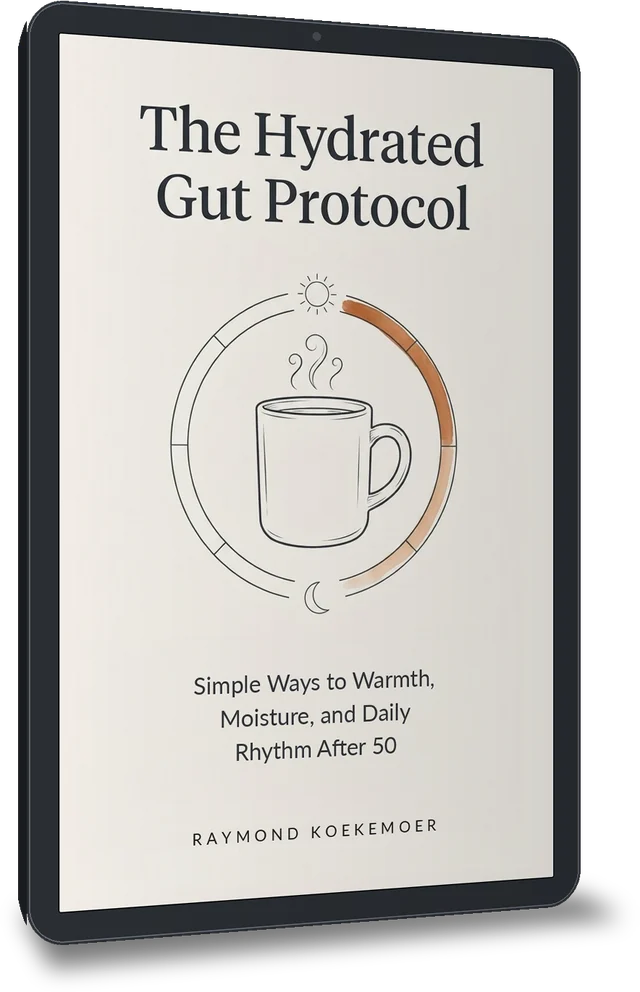
The Hydrated Gut Protocol
Simple Ways to Warmth, Moisture, and Daily Rhythm After 50
Coming soon to Apple Books, Kobo, Google Play Books, and other stores.
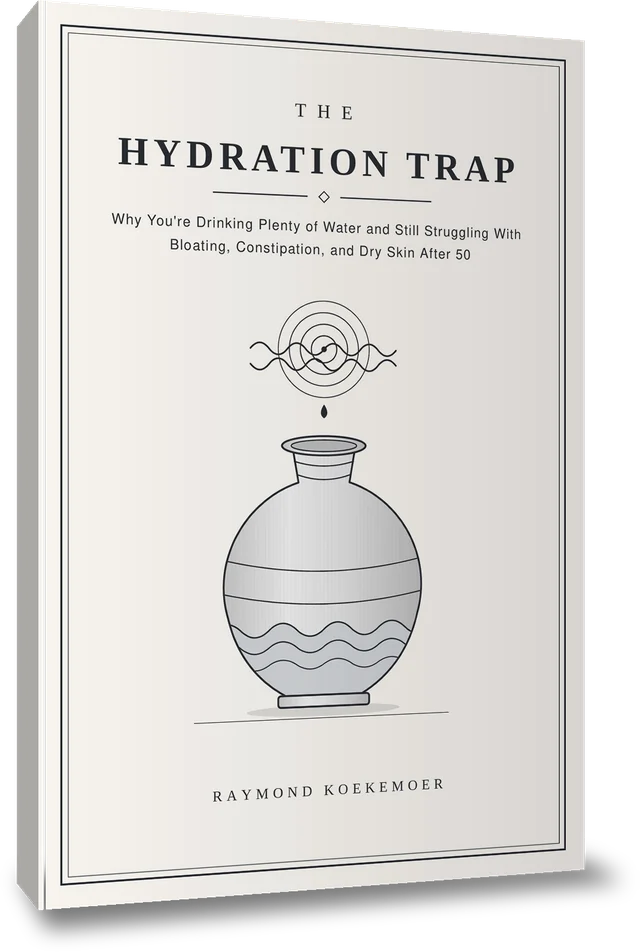
The Hydration Trap
Why You’re Drinking Plenty of Water and Still Struggling With Bloating, Constipation, and Dry Skin After 50
Kindle edition on Amazon Paperback on Amazon
Also available in Kindle Unlimited.