 The Hydrated Gut
Does Thirst Fade With Age? What I Do About It in My 50s
By Raymond Koekemoer · October 16, 2026
Labels used in this article: Tradition what Ayurveda and traditional Chinese practice teach · My experience what I tried and what happened to me · Research what studies and health bodies report. How I check what I publish
You will hear it said that after sixty you cannot trust your thirst. I am 54, and I stopped waiting for thirst a few years ago. So I went looking for where that idea comes from, and whether it is worth anything.
This is what I found, and what I do about it. None of it is medical advice. It is one person’s reading of an old tradition, a short look at what has been tested, and a habit tried in a body that has passed fifty.
What I noticed first
My experience When I was younger, my body told me loudly when it needed a drink. These days that signal is fainter. I skateboard, and on a warm morning I could finish a session with a dull head and a dry mouth and realize I had not thought about water once. That is one person. It proves nothing about you. But it made me want to know what is actually known.
What Ayurveda says about thirst
Tradition Ayurveda, India’s classical medicine, keeps a list of the body’s natural urges that should never be held back. Thirst is on it, beside hunger, sleep, and the need to pass water. One of its oldest texts, the Charaka Samhita, describes what follows when thirst is held back: dryness of the mouth and throat, tiredness, and weakness.
Notice what that teaching asks. It does not say to drink by the clock, or to force water down. It says that when the body asks, answer. That is simple enough when the asking is loud.
What it says about the later years
Tradition The same tradition describes three forces at work in the body: vata, pitta, and kapha. Each, it says, leads a different stage of life: kapha the early years, pitta the middle, and vata the later years. The Ashtanga Hridaya, another of its classic texts, gives vata the qualities of dry, light, and cold, and it teaches that a quality is eased by its opposite. So for the later years the tradition leans toward moisture, nourishment, and warmth.
Those are the tradition’s own pictures. They are not anatomy, and I am not suggesting anyone read their own constitution from a paragraph. But they describe something I recognize in myself: more dryness than I had at thirty, and a thirst that speaks more quietly.
When the asking grows quiet
My experience My difficulty is the other half of it: what do you do when the body asks more softly than it used to? I cannot prove that my thirst has changed. I can only say that I notice it later than I once did, and usually after I am already dry.
Research Modern studies have looked at this, and I will be plain about them: they are few, they are small, and they tested people over 65, not people in their fifties. The best known compared seven men aged 67 to 75 with seven men in their twenties after a full day without water; the older men felt less thirsty and drank less. A larger review of people over 65 found that feeling thirsty, a dry mouth, and the color of the urine were not reliable signs, on their own, of who was short of water, and noted that signs taken together may tell more. These findings concern heat, effort, and going without. They do not say that thirst fails in ordinary daily life, and they say nothing certain about any one person.
No study knows your body: your build, how you eat, the climate you live in. The old traditions always began with the person in front of them. So I take all of this as a guide, and I watch what happens in me.
Words and a sentence
My experience I think of the body’s hydration signals as words. Thirst is one. A dry mouth is another. So are the color of the urine, a dull head, dry skin, and how the bowels are moving. One word on its own tells you little. Read together, they make a sentence. So I watch them all, and I do not wait on any single one.
Better still is to need the signals less. For me, hydration has become a way of life and not an every-now-and-again thing: part of how I eat, when I drink, and how I plan a day.
Why I am building the habit now
My experience If the signal may grow quieter in my sixties and seventies, then my fifties are the time to stop depending on it: while it still works, and before I need the habit. A habit takes months to settle. I would sooner settle it now.
The four points in my day
My experience I tie a drink to four points in the day, whether I feel thirsty or not.
- Before I head out, not just when I get back.
- At every pause when I am moving or it is hot. Small sips, not one big drink at the end.
- Mostly in the morning and the afternoon, and less in the evening, so that my sleep is not broken.
- Before I bathe or shower, a glass of warm water. It is a tip I picked up many years ago, and I have kept it.
And one thing I never do: force it. More is not better. I do not chase a number, and I do not drink a liter at once to catch up. Small and often does it better than a big glass at big intervals.
For someone older than you
If you have a parent or a neighbor in their eighties, on a hot day do not ask whether they are thirsty. Bring them a drink, and sit with them while they have it.
When to see your doctor
If your doctor has given you a fluid limit, for your heart or your kidneys, that advice comes first, and so does any advice about your medicines. Never change the dose or timing of a diuretic or any other medicine on your own. Too much water can do harm as well as too little.
See your doctor about great thirst with frequent urination, confusion, dizziness or fainting, passing very little urine, new swelling in your legs or ankles, or a dry mouth that will not ease.
The short version
- Ayurveda lists thirst among the urges that should never be held back.
- It also says vata, its picture of what is dry, light, and cold, leads the later years, and that moisture, nourishment, and warmth balance it.
- A few small studies suggest that later in life thirst speaks more quietly under heat or effort. Nobody in their fifties was studied.
- Each signal is a word; read together they make a sentence. I watch them all.
- I am building the habit now: a drink before I head out, small sips at every pause, most of my fluid before evening, and a glass of warm water before I bathe.
- I never force water down.
The daily rhythm these habits belong to is in The Hydrated Kitchen and Daily Rhythm, and the longer story of how I came to them is in The Hydration Trap.
Sources
The tradition and my own experience are described in the text. These are the published sources behind what is said about each.
- Charak Samhita Research, Training and Skill Development Centre. Naveganadharaniya Adhyaya. Charak Samhita Online. Charaka Samhita, Sutrasthana, chapter 7: thirst among the urges not to be held back, and the results of holding it back.
- Vagbhata. Ashtanga Hridaya, Sutrasthana, chapter 1, translated by Dr. J. V. Hebbar. Easy Ayurveda. The three forces and the stages of life, the qualities of vata, and increase by like and decrease by unlike.
- Phillips PA, Rolls BJ, Ledingham JG, and others. Reduced thirst after water deprivation in healthy elderly men. New England Journal of Medicine, 1984. Seven older and seven younger men after 24 hours without water.
- Hooper L, Abdelhamid A, Attreed NJ, and others. Clinical symptoms, signs and tests for identification of impending and current water-loss dehydration in older people. Cochrane Database of Systematic Reviews, 2015. On thirst, dry mouth, and urine color as signs in people aged 65 and over.
Keep going
- Coming up On Friday, October 30 on the YouTube channel: Does Thirst Fade With Age? What I Do About It in My 50s
- Read next How Much Water Should You Drink a Day After 50?
- Read next Still Skating at 54: What Staying Active Has Taught Me About Hydration
- Free The Daily Hydration and Kitchen Planner, a printable day sent to your email
Found this useful? You can buy me a coffee. It’s a thank-you, not a payment for advice, and it helps keep the articles and videos coming.
From the books
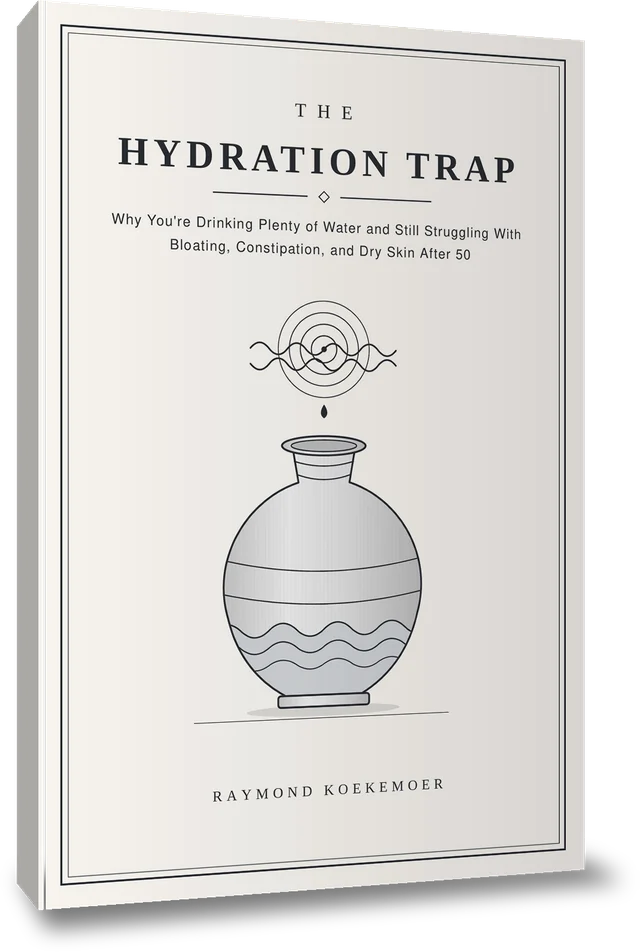
The Hydration Trap
Why You’re Drinking Plenty of Water and Still Struggling With Bloating, Constipation, and Dry Skin After 50
Kindle edition on Amazon Paperback on Amazon
Also available in Kindle Unlimited.
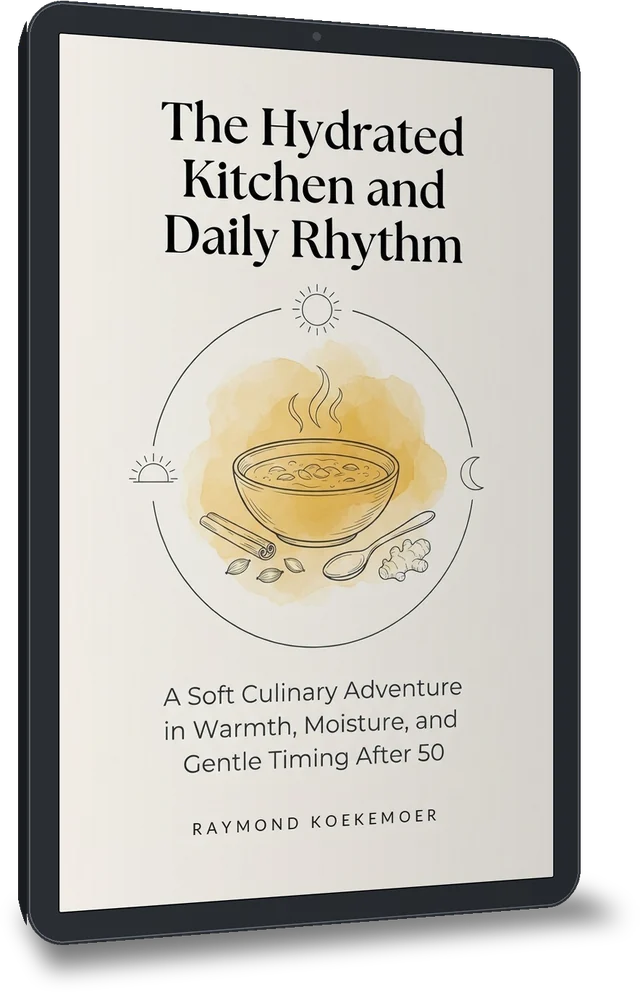
The Hydrated Kitchen and Daily Rhythm
A Soft Culinary Adventure in Warmth, Moisture, and Gentle Timing After 50
Coming soon to Apple Books, Kobo, Google Play Books, and other stores.