 The Hydrated Gut
Still Skating at 54: What Staying Active Has Taught Me About Hydration
By Raymond Koekemoer · October 5, 2026
Labels used in this article: Tradition what Ayurveda and traditional Chinese practice teach · My experience what I tried and what happened to me · Research what studies and health bodies report. How I check what I publish
I am fifty-four, and I still skateboard.
I came across an almost abandoned skatepark when I was 49, and found a sincere, passionate community trying to rebuild it. As I spent more time among those warm, welcoming people, it occurred to me that skateboarding might be one of the better things I had tried for aging well. Balance, muscle, quick reactions — the things that quietly slip in later life — and the learning of something new, which seems to be good for the brain. I also realized that if I did not start then, I never would. So I started. Slowly. No hurry. Trying not to fall, and still falling on occasion.
I once fell forwards onto my elbows coming down a ramp. Someone at work thought I must have been drinking at the weekend, and said skateboarding was childish. To me it was a way of exercising more than the body. It loosened body, mind, and spirit. Every small accomplishment felt like added meaning. Even a small trick, managed, felt like a real one. It has been five years since those shaky beginnings, and I still try to skate every day.
I am not telling you to buy a skateboard. I am telling you because staying active in my fifties taught me things about hydration that I had not learned from reading.
Thirst gets quieter
When I was younger, my body told me loudly when it needed a drink. That signal has grown fainter. It is a common change with age. Waiting until I feel thirsty is no longer a reliable plan, especially when I am moving and the day is warm.
So I stopped relying on thirst alone. I drink at regular points in the day, and I watch for other signs: darker urine than usual, a dry mouth, a dull head.
Sipping works better for me than chugging
My experience For years my habit was to forget about water, then drink a great deal at once. Most of it seemed to go straight through.
Now I sip steadily, before, during, and after I skate. Smaller amounts, more often. It is easier on my stomach, and I am not running to the bathroom twenty minutes later.
These days I take a flask. Sometimes warm water with a little salt, a little brown sugar, and a squeeze of lemon, if I am feeling dry. Sometimes CCF tea — cumin, coriander, and fennel, steeped in warm water. The salt is a few grains, not a spoonful, and it is not for everyone. See the cautions below.
What I eat afterward matters too
After exercise, I used to reach for something cold and quick. These days I would rather have something warm and soft: a soup, a stew, a bowl of something cooked. It replaces fluid and food together, and it sits well.
Lunch is my largest meal, and I have grown partial to dal — red lentils, cooked soft. If I skate in the afternoon, dinner is often soup, leftover lentils, or oats. Lunch is the treat. Dinner is the settling-in.
Listening, not pushing
The biggest change is not about water at all. At fifty-four, I pay attention. If I am tired, I stop. If something hurts, I do not skate through it. I wear a helmet.
Skateboarding uses muscles I do not use often. I soon found that a warm Epsom salt bath — a cup or two of salts in the bath — soothes muscles and joints better than anything else I have tried. I also take a good-quality magnesium, vitamin K2, and vitamin D3, for bone strength. That is my own routine, not a prescription. Supplements are worth checking with a doctor or pharmacist, especially if you take other medicines.
That same attention is what helped my digestion. Noticing how the body responds, and adjusting gently, has served me better than any rule.
If you want to move more
You do not need a skateboard. A daily walk does a great deal, for mood, for sleep, and for regularity. Choose something you enjoy enough to keep doing.
A few cautions, because they matter.
- Check with your doctor before starting a new activity, especially if you have a heart condition, high blood pressure, diabetes, joint problems, osteoporosis, or trouble with balance, or you have not exercised for a while. A fall matters more after 50.
- Heat needs respect. In hot weather, exercise earlier or later in the day, rest in the shade, and drink regularly. Feeling dizzy, confused, or faint, or stopping sweating in the heat, means stop and get help.
- More is not always better. Drinking far more water than you need during long exercise can be dangerous too. Steady sips are the aim.
- Do not add salt to drinks if you have high blood pressure, heart failure, or kidney disease, or if you have been told to limit sodium. The flask drink also contains a little sugar, so if you manage diabetes, check with your care team first.
- Supplements can interact with medicines. Vitamin K can interfere with warfarin and some other blood thinners, and magnesium is not suitable for everyone with kidney disease. Ask your doctor or pharmacist before starting any of them.
- Warm baths. If you have a heart condition, low blood pressure, or you get dizzy easily, keep the water comfortably warm, not hot, and get out slowly.
- If you have a fluid limit from your doctor, or you take diuretics (“water pills”), ask how to handle exercise days.
- Wear the protective gear for whatever you do.
The short version
- Thirst gets quieter with age, so do not wait for it.
- Sip steadily. Do not save it all up.
- A warm, soft meal afterward replaces fluid and food together.
- Pay attention to your own body, and adjust gently.
That last point is where the books begin. The Hydration Trap is the place to start.
Sources
The traditions and my own experience are described in the text. These are the published sources behind the research and official figures mentioned above.
- Kenney WL, Chiu P. Influence of age on thirst and fluid intake. Medicine & Science in Sports & Exercise, 2001. On thirst growing fainter with age.
- Hew-Butler T, and others. Statement of the Third International Exercise-Associated Hyponatremia Consensus Development Conference. Clinical Journal of Sport Medicine, 2015. On the danger of drinking far beyond need.
- U.S. National Institutes of Health, Office of Dietary Supplements. Vitamin K: Fact Sheet for Consumers. On vitamin K and warfarin.
- U.S. National Institutes of Health, Office of Dietary Supplements. Magnesium: Fact Sheet for Consumers. On magnesium and kidney disease.
Keep going
- Watch Short videos on The Hydrated Gut YouTube channel
- Read next How Much Water Should You Drink a Day After 50?
- Read next Does Thirst Fade With Age? What I Do About It in My 50s
- Free The Daily Hydration and Kitchen Planner, a printable day sent to your email
Found this useful? You can buy me a coffee. It’s a thank-you, not a payment for advice, and it helps keep the articles and videos coming.
From the books
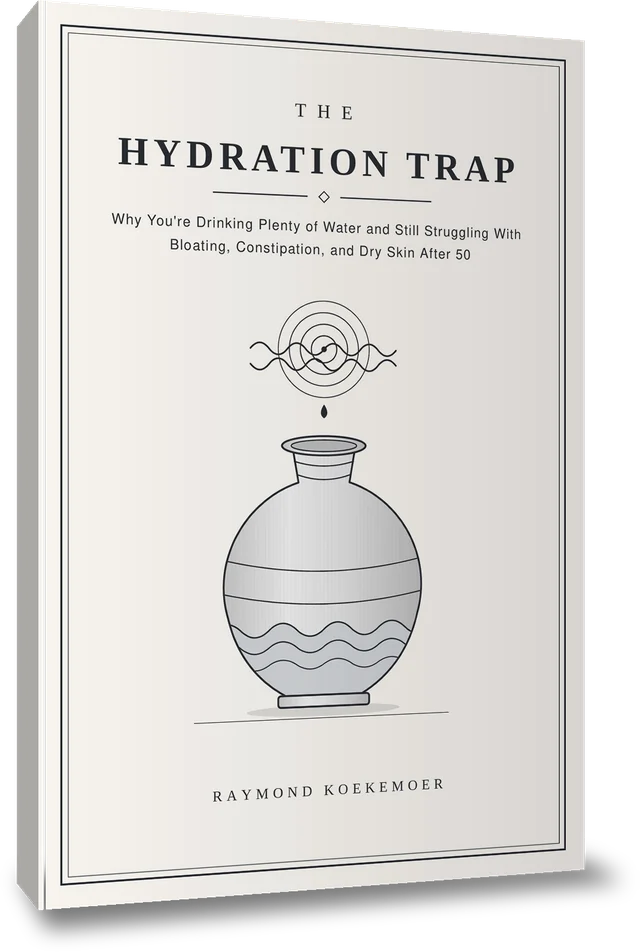
The Hydration Trap
Why You’re Drinking Plenty of Water and Still Struggling With Bloating, Constipation, and Dry Skin After 50
Kindle edition on Amazon Paperback on Amazon
Also available in Kindle Unlimited.
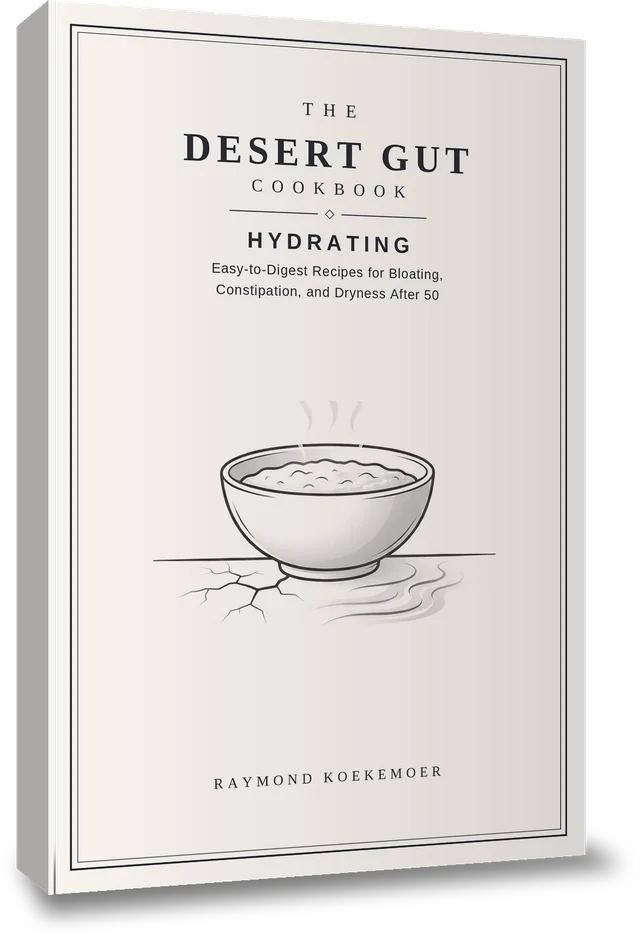
The Desert Gut Cookbook
Hydrating, Easy-to-Digest Recipes for Bloating, Constipation, and Dryness After 50
Kindle edition on Amazon Paperback on Amazon
Also available in Kindle Unlimited.