 The Hydrated Gut
Drinking Water Before Bed After 50: Why It Can Keep You Up at Night
By Raymond Koekemoer · October 5, 2026
Labels used in this article: Tradition what Ayurveda and traditional Chinese practice teach · My experience what I tried and what happened to me · Research what studies and health bodies report. How I check what I publish
For years I ended every day the same way: making sure I was hydrated before bed, with two large glasses of water at my bedside. It felt like the responsible thing to do. Everyone says to drink more water, and bedtime was when I remembered.
Then I would be up three or four times before morning. And I still woke with a very dry mouth.
If that sounds like your nights, this piece is for you. It makes no medical promises. It is what I learned about timing, and what I changed.
Why a bedtime glass can backfire
Research The body does not store a late glass of water for the morning. Most of what you drink in the hour before bed is filtered by the kidneys within a few hours — exactly when you are trying to sleep.
Several things about getting older can make this more noticeable. Many of us make less of the hormone that slows urine production overnight. The bladder may hold a little less than it used to. And fluid that has settled in the legs during the day can return to the circulation once we lie down.
So the water goes in at 10 PM, and it wants out again at 1 AM. Sleep breaks into pieces. Broken sleep can color the whole next day.
Why you can still wake up dry
This was the part that puzzled me. If I was drinking so much, why was my mouth dry at 3 AM?
A dry mouth at night is often not about how much water is in the body. Breathing through the mouth, a dry bedroom, and many common medicines can all dry the mouth, however much you drank. A large glass at bedtime does little about any of those. It mostly fills the bladder.
A dry mouth that persists is worth mentioning to your doctor or dentist, especially if it is new.
What I changed
My experience Nothing dramatic. I did not drink less. I drank earlier.
- Most of my fluids moved into the day. Morning and afternoon, spread out, not saved for the evening.
- I eased off the larger drinks about 2–3 hours before bed. A small glass with dinner, if I wanted it.
- One small warm cup after 8 PM. For me, that is rooibos with chamomile, about ¾ cup (180 ml), sipped slowly. Both are caffeine-free.
- A modest glass by the bed, not two large ones. About ½ cup (120 ml). If I wake truly thirsty, I take a few sips.
- The bathroom is the last stop before bed.
It took about a week for my nights to settle. I was not getting up as often, and the mornings felt clearer. Your experience may be different, which is why it helps to keep a simple note of your nights for a week or two, and see what your own pattern is.
A gentle way to try it
If a big bedtime drink has been yours for years, do not change everything at once.
- For two days, drop from your usual amount to about half, and add the same amount earlier in the day.
- For the next few days, bring the bedtime glass down to a modest half cup.
- Keep your daily total steady. The aim is better timing, not less water.
If you feel thirstier, dizzy, or unwell, go back to what you were doing and talk to your doctor.
When it is not about the water
Getting up once in the night is common at any age. Please see your doctor if you regularly wake two or more times to urinate, if it is new or getting worse, or if it comes with any of these:
- pain or burning, or blood in the urine
- a weak or interrupted stream
- unusual thirst
- swollen ankles or legs
- loud snoring, or waking up gasping
Frequent night-time urination can be a sign of prostate changes, bladder conditions, a urinary infection, diabetes, heart or kidney conditions, or sleep apnea. It can also be linked to when certain medicines are taken. A change of routine will not fix those, and some need treatment.
Two more cautions. Never change the timing of a prescribed medicine, such as a diuretic (“water pill”), on your own. And if your doctor has given you a fluid limit, their limit comes first.
The short version
- A large drink at bedtime mostly reaches the bladder, not the dry mouth.
- Drink the same amount, earlier.
- Keep the evening small and warm.
- If you are up twice a night or more, tell your doctor.
I wrote more about the evening routine, including a one-page weekly planner, in The Hydrated Gut Sleep Blueprint.
Sources
The traditions and my own experience are described in the text. These are the published sources behind the research and official figures mentioned above.
- Leslie SW, and others. Nocturia. StatPearls, U.S. National Library of Medicine. On the night-time hormone, bladder capacity, fluid returning from the legs, and the conditions behind frequent night-time urination.
- U.S. National Institute of Dental and Craniofacial Research. Dry Mouth. On causes, including medicines, and on protecting the teeth.
Keep going
- Watch Drink Water at the RIGHT TIME: My Secret to a Full Night's Sleep
- Read next Dry Mouth at Night After 50: Why More Water Isn’t Always the Answer
- Read next How Much Water Should You Drink a Day After 50?
- Free The Daily Hydration and Kitchen Planner, a printable day sent to your email
Found this useful? You can buy me a coffee. It’s a thank-you, not a payment for advice, and it helps keep the articles and videos coming.
From the books
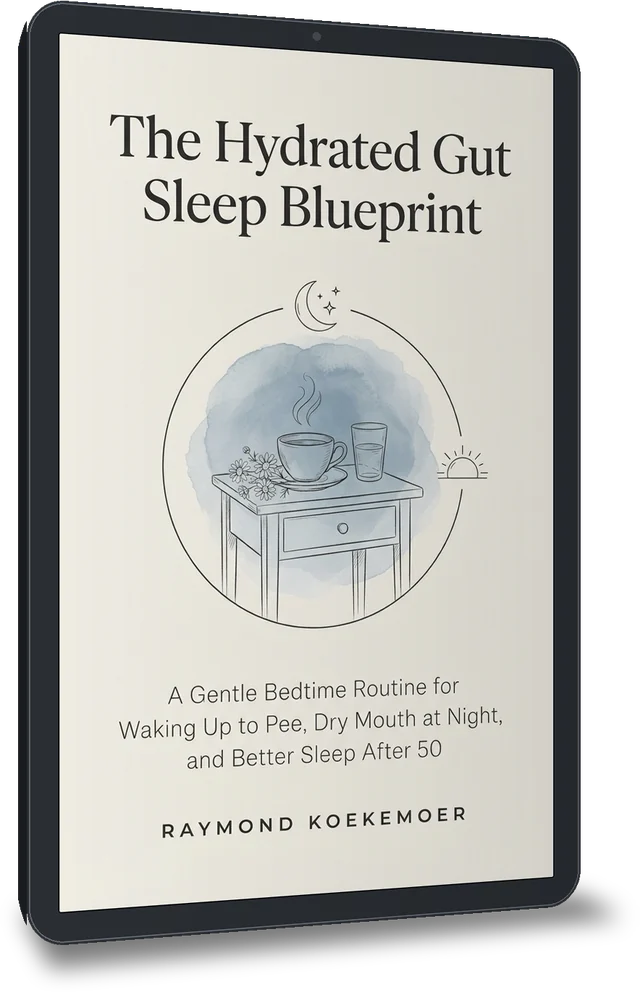
The Hydrated Gut Sleep Blueprint
A Gentle Bedtime Routine for Waking Up to Pee, Dry Mouth at Night, and Better Sleep After 50
Coming soon to Apple Books, Kobo, Google Play Books, and other stores.
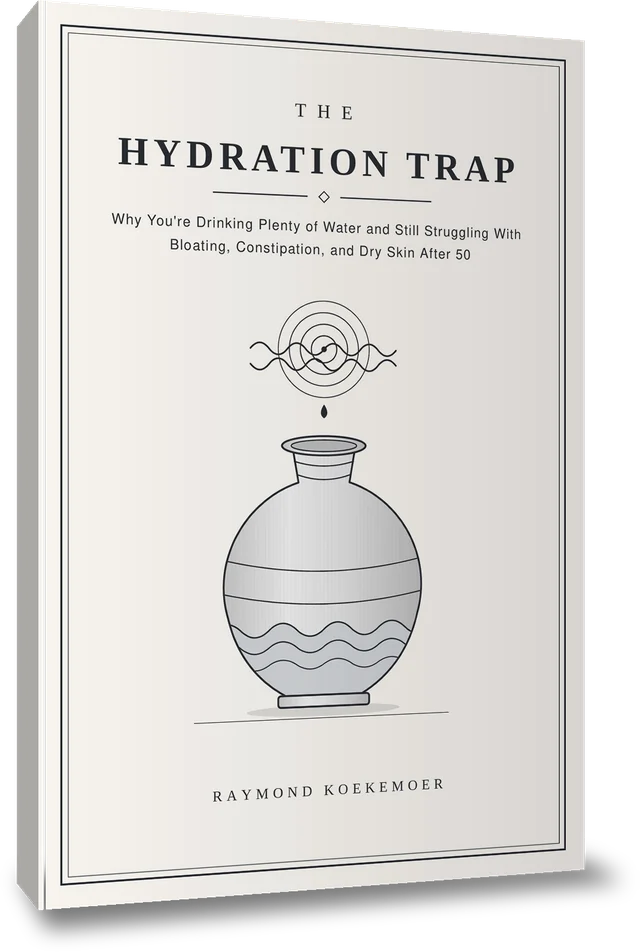
The Hydration Trap
Why You’re Drinking Plenty of Water and Still Struggling With Bloating, Constipation, and Dry Skin After 50
Kindle edition on Amazon Paperback on Amazon
Also available in Kindle Unlimited.